Friday, March 18, 2016

It was a windy night...

... but I got out into the observatory to check out my Celestron NexStar 8iSE on the Moon.
Here are some images captured through it. I ended my session within the hour as the winds were swirling in the observatory and moving the scope too much for photography and the winds aloof were blurring the view of the Moon.


Thursday, March 17, 2016

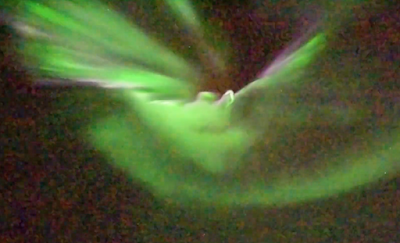
Ever wonder what Northern Lights look like in REAL time (not time-lapse)?

Alan Dyer braved the cold air of Churchill, Manitoba, to grab real-time video of an auroral display that approximates very closely what you can see with your unaided eye. The low-light views of the night sky available with modern digital cameras are truly amazing. And it is just a coincidence that there is a lot of green in this video (it's St. Patricks Day, you know!)

https://vimeo.com/155760010

Tuesday, March 15, 2016

Awesome shot of the Total Solar Eclipse I saw on Facebook

Just saw this shot on Facebook by Shigemi Numazawa (https://www.facebook.com/numazawa7) of the corona during the total eclipse in Indonesia. Great wider view!


This image is a combined shot (HDR) at various exposures to bring out the best in the eclipse.
If you look carefully enough you can actually see detail in the Moon itself ! 

Way to go Shigemi!

Wednesday, March 9, 2016

Monday, February 22, 2016

Back in the Observatory with The Great Orion Nebula (close up)

Today was a preparation day at the observatory for CLEAR SKIES !
I jimmy-rigged an electric motor focuser so that I don't have to touch the telescope. I made it out of an old windup radio generator motor, two AA batteries, and two touch switches... works well !

As evening approached I replaced the standard Celestron NexStar 8i SE collimation screws with a home-made "Bob's Knobs" screws that I got at Ace Hardware. Ok, they are not as nice or convienent as Bob's Knob's (which I will buy someday) but at 75 cent for three, it was hard to pass up. The collimation went well and the views through the eyepieces tonight were very good.

As evening settled in I did some live broadcasting on Night Skies Network (NSN) of the Great Orion Nebula (M 42).  Nothing spectacular, as the full Moon was rising in the east but it was enjoyable... until the temps dropped below 27 degrees F. So I threw the Big Switch and shuttered the observatory.

Here is a poor video snapshot sample of what I broadcast tonight. Tracking wasn't all that good.
Telescope: Celestron NexStar 8i
Camera: Video camera - Mallincam Micro-Ex
Settings: Brightness: 8  Exposure: X512  Gamma: .3  DNR: 1

Thursday, February 18, 2016

Part 2: Prepare to Meet Thy Total Solar Eclipse on August 21, 2017

As I mentioned in my previous post, there is going to be a total solar eclipse of the Sun that will be visible here in the Northwest, and in Oregon in particular, on August 21, 2017 at about 10:21 am (PDT) in the morning.

I was reading my January 2016 Sky and Telescope magazine...
...when I noticed an article referred to on the front page about "Be Part of Coast-to-Coast Eclipse Science," the possibility of joining with amateur astronomers across the USA in recording the eclipse for scientific research in video. Sounded interesting...

It is called "The Citizen Continental-America Telescopic Eclipse Experiment" or C.A.T.E. (link).


"The Citizen CATE Experiment will use a fleet of telescopes to observe the total solar eclipse of 21 Aug 2017.  As the shadow of the moon travels across the continental USA, citizen astronomers from more than 60 sites will take images of the brightness of the inner solar corona.  While the totality phase of the eclipse will last only 2 minutes at each site, the combined Citizen CATE Experiment data set will reveal for the first time how this part of the solar atmosphere changes during 90 minutes. New scientific results about the dynamics of the magnetic fields and plasmas in this part of the solar corona will be derived from the data, and the image sequence will provide a beautiful perspective of the solar eclipse as never seen before." (text copied from the home page of C.A.T.E.)

Here is what the scope that will be used looks like:


I have already signed up and spoken with the coordinator, Matt Penn (who is an associate astronomer with the National Solar Observatory in Arizona) and a fellow amateur astronomer in Salem, Oregon about helping with the training and implementing of the observations here in Oregon.

I am looking forward to participating with this project !

Here is a map that shows the path of the total solar eclipse here in Oregon:


Here is a map that shows the path across the entire USA:


If you want to find out where the closest places are to you check out this page.
You can zoom in and locate potential sites near you!

Part 1: Prepare to Meet Thy Total Solar Eclipse on August 21, 2017

Yes, the northwest is going to be blessed with another total solar eclipse on August 21, 2017 !
The last one was Feb. 26, 1979, the path of which crossed over the Goldendale Observatory (info) just outside of Goldendale, Washington (map).

At that time, my wife and I were living in Sunnyside, Washington (map)   and we made the one hour trip to get in the path of the eclipse. Our aim was to get up to the observatory for the big event. But we were turned away at the lower gate: all the major news networks had taken up position at the observatory (map) and there was "no room in the inn" for us normal folk.

So we drove around Goldendale looking for an "less than ideal" spot, which turned out to be the parking lot of the high school. We set up our little Astroscan scope that I had jimmy-rigged onto an old equatorial mount and attached my Pentax K1000 camera to it with some good old Ekatchrome slide film.
That's my still beautiful wife at the scope
with her VW bug we both miss!

Anybody remember this?


Or these?

Well, just before the beginning of totality I noticed some clouds building up on the north side of the Sun. I looked up at the observatory and... it was in the shade of those clouds! All the networks were unable to see the Sun at totality! We were in the best position after all !

I shot away and we enjoyed the moment!

The images were great! There were Baily's Beads and a prominence, too ! (the photo here is not my shot but exactly like mine)

But I forgot to "bracket" my exposures (that means vary the amount of light via shutter speed selections) and I missed capturing the corona. Here is what it would have looked like...

Anyway, just as totality ended those very same clouds covered our view of the Sun.

We stowed the gear, jumped into the car and headed to Yakima where there was a one hour film processing store to get our film developed. (Who remembers that too?)

Ah, for digital photography back then! I would have noticed my need to bracket and been assured of proper exposure "on the fly"!

So.... I am going to be better prepared for next year's total solar eclipse so that I vary my exposures and capture it in ALL of its incredible beauty!

In fact, I will have at least 3 DSLR cameras capturing the event: one recording it as a movie, another capturing the wide field view including the landscape, another on an equatorial mount closeup!

So, get prepared!   Be sure to check out Part 2: Prepare to Meet Thy Total Solar Eclipse on August, 21, 2017